International Colloquium October 10th-11th 2013
Miséricorde: room 3118, Kinderstube: room Laure Dupraz
Philology and Textual Criticism of the Hebrew Bible
Philologie et Critique textuelle de la Bible hébraïque
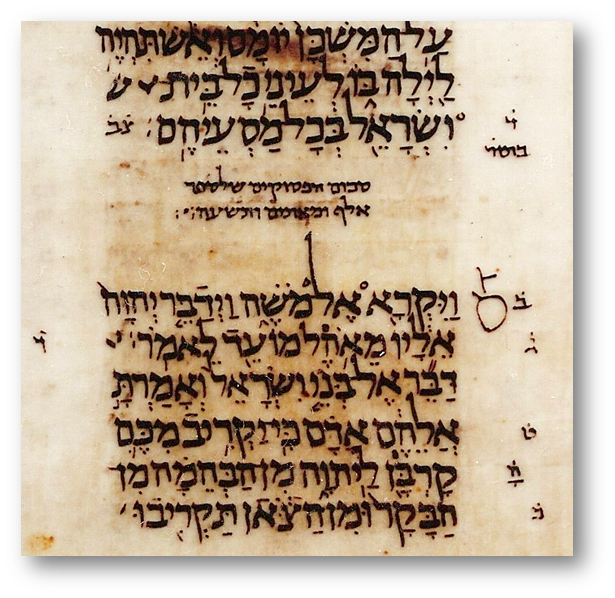
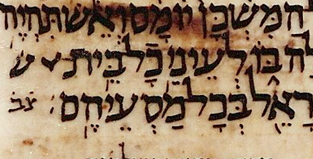
At a time when fields of research may end up in different domains of expertise even if they are closely related, the necessity of trans-disciplinary study becomes ever more pressing. In his book, Comparative Philology and the Text of the Old Testament (1968), James Barr showed the interconnectedness of Semitic philology and textual criticism of the Hebrew Bible. His work is at once a warning against certain abuses and a road map for best practice in the two fields. Since the days of Barr, textual criticism has made great strides, notably thanks to the publication and exploitation of the Qumran texts. Philology too—the study on the precise meaning of words, expressions, grammatical forms and syntax—has continued to develop. Its main fruits have been collected in a couple of new dictionaries (particularly SHD and Gesenius18). At the same time, the connection between these two fields of research has become less and less self-evident. The colloquium on Philology and Textual Criticism has the objective to put this connection on the agenda once again. Different questions will be broached. How can philological study guide the textual critic? And how does textual criticism come to the aid of the philologist? Are philology and textual criticism necessarily linked, or are the connections between them merely accidental? Can philology justify conjectural emendations, and if so, on what conditions? Do philological hypotheses have a place in a text-critical apparatus or commentary? Papers will discuss theoretical questions and analyse test cases illustrating the principles at issue.
Philologie et Critique Textuelle de la Bible hébraïque
À une époque où même des domaines de recherches proches se trouvent cantonnés en expertises distinctes, la nécessité d’une approche transdisciplinaire s’impose de plus en plus. Dans son livre Comparative Philology and the Text of the Old Testament (1968), James Barr avait montré l’intérêt d’intégrer une approche philologique à la critique textuelle de la Bible hébraïque : il s’agissait autant d’une mise en garde contre certains abus que d’une feuille de route pour une meilleure pratique dans les deux disciplines. Depuis les jours de Barr, la critique textuelle a progressé à pas de géant, grâce notamment à la publication complète des textes de Qumran et l’exploitation de ceux-ci. La philologie quant à elle—la recherche sur le sens précis des mots, des expressions, des formes grammaticales et des phrases—n’a pas chômé ; une grande partie de ses fruits a été récoltée dans quelques nouveaux dictionnaires (notamment Sheffield et Gesenius18). Cependant, la connexion entre ces deux champs de recherches est moins évidente que jamais. Le colloque sur Philologie et Critique Textuelle a pour intention de remettre cette connexion à l’ordre du jour. Les questions sur lesquelles on pourra s’interroger sont multiples : Comment une approche philologique peut-elle gérer les incertitudes sur le plan textuel ? Comment la critique textuelle exploitera-t-elle au mieux les découvertes et hypothèses philologiques ? Les deux champs sont-ils nécessairement liés, ou s’agit-il de recoupements ponctuels ? La philologie peut-elle justifier des conjectures en critique textuelle et, si oui, dans quelles conditions ? Quelle part faut-il donner dans l’apparat critique, voire dans le commentaire textuel, aux hypothèses philologiques ? Les contributions traiteront de questions théoriques et aborderont des cas d’exemple illustrant les principes discutés.
Program
Thursday, October 10th (Misericorde, Room 3118)
| 9h-9h30 | Introduction |
| 9h30-10h15 |
Richard Weis (Lexington Theological Seminary, KY, US) The Intersection of Philology and Textual Criticism in Biblia Hebraica Quinta:Background, Theory and Practice |
| 10h15-10h30 | Break |
| 10h30-11h15 |
Innocent Himbaza (University of Fribourg, CH) Philological emendations as a solution to some textual criticism cases |
| 11h15-12h00 |
Viktor Golinets (Hochschule für Jüdische Studien, Heidelberg, DE) What philology can achieve and what not in the study of the Hebrew Bible text |
| 12h00-14h00 | Break-Lunch |
| (Miséricorde Kinderstube, Room Laure Dupraz) | |
| 14h00-14h45 |
Yohanan Goldman (University of Fribourg, CH) Philology, textual criticism and the aesthetics of the poem : A few examples in the Psalms (Ps viii, xvi, xxii). |
| 14h45-15h00 | Break |
| 15h00-15h45 |
Stefan Schorch (Martin-Luther-Universität Halle-Wittenberg, DE) Linguistic Difference and Textual Criticism: The Case of the Masoretic Vocalization |
| 15h45-16h30 |
Abraham Tal (Tel Aviv University, IL) Some Reflections on the Textual Traditions of the Samaritan Pentateuch |
| 18h |
Visit of the Libray of the Institut Dominique Barthélemy |
Friday, October 11th (Kinderstube, Room Laure Dupraz)
| 9h00-9h45 |
Jan Joosten (University of Strasbourg, FR) Post-biblical Hebrew as a controlling factor in the arbitration between variant readings |
| 9h45-10h30 |
Noam Mizrahi (Tel Aviv University, IL) What is a 'Variant'? Reconsidering the Relationship between Text and Language of the Qumran Isaiah Scrolls |
| 10h30-10h45 | Break |
| 10h45-11h30 |
Adrian Schenker (University of Fribourg, CH) L'incidence de la critique textuelle sur le lexique hébreu biblique: les cas de שלם-shalem, Gen 33:18; חרם-haram, Is 11:15; חרמי-harmî, 1 Rois 20:42 |
| 11h30-12h15 |
Andrés Piquer Otero (Universidad Complutense de Madrid, ES) Between the Archaic and the Literary: The 'Narrative' Infinite Absolute Clause in the Text(s) of the Bible |
| 12h15-14h00 | Break |
| 14h00-14h45 |
Philippe Lefebvre (University of Fribourg, CH) Le Nouveau Testament comme vérification de choix lexicaux de la Septante. Quelques exemples d'un propos théologique dans la Bible grecque |
| 14h45-15h00 | Break |
| 15h00-17h00 | Global discussions and conclusions |
Map
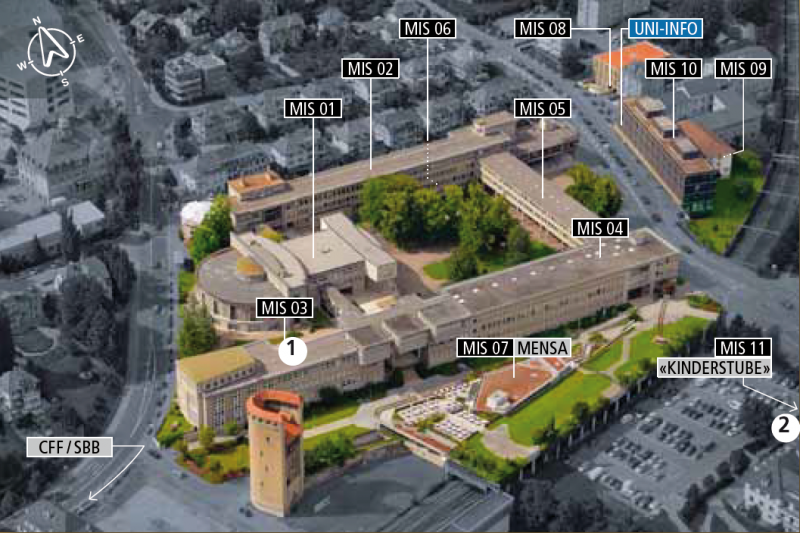
(1) Miséricorde, Room 3118, Av. de l’Europe 20 – 1700 Fribourg
(2) Kinderstube, Room Laure Dupraz, Rue de l’Hôpital 4 - 1700 Fribourg
Informations and registration
- MER PD. Dr Innocent Himbaza, University of Fribourg (CH) :
- Prof. Jan Joosten, University of Strasbourg (FR) :
Organization
- Faculté de théologie protestante, University of Strasbourg (FR) and Institut Universitaire de France
- Institut Dominique Barthélemy, University of Fribourg (CH)